
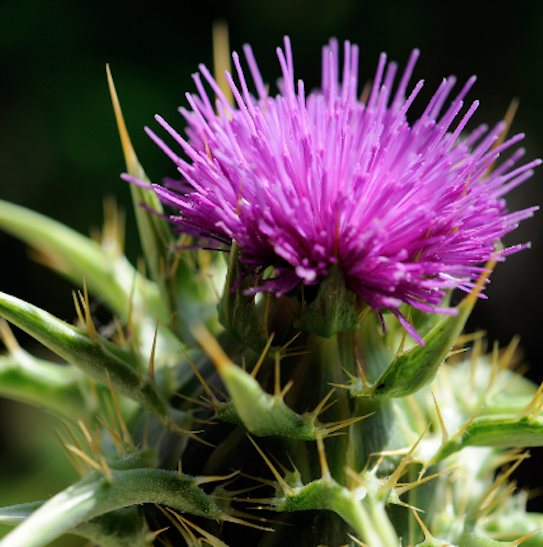
The Milk thistle (Silybum marianum, Carduus marianusand its beneficial effects on liver function have been known for several centuries. Also known as wild artichoke, milk thistle belongs to the Asteraceae family. It is recognizable by its pale green, spiny leaves marbled with white and its purple flowers.”
Milk thistle owes its name to a legend. While traveling between Judea and Egypt to escape Herod, the Virgin Mary is said to have breastfed the infant Jesus in a thistle grove. A few drops of milk are believed to have fallen onto the leaves, giving rise to the characteristic white veins of the species.
The silymarine is considered the active substance of the plant, responsible for its stimulating and regenerative properties on the liver. Silymarin is in fact a complex of compounds, the most active of which is silybineThe highest concentration is found in the seeds or fruits of the plant.
After several demanding months for both body and mind (cold weather, lack of light, overly rich diets), spring is the ideal season to make a fresh start and begin a detox program. Thanks to its effects on the liver—the body’s primary ‘detox’ organ—milk thistle is the perfect ally for the arrival of brighter days.
The consumption of milk thistle fruit or seeds contributes to the protection of the liver* and the liver detoxification potential*.
Available as a standardized extract with 80% silymarin and 30% silybin.
*Authorized claims pending evaluation by the European Commission.