
During periods of intense emotional strain, stress, and mental fatigue, certain plants can help maintain a positive mood and state of mind.
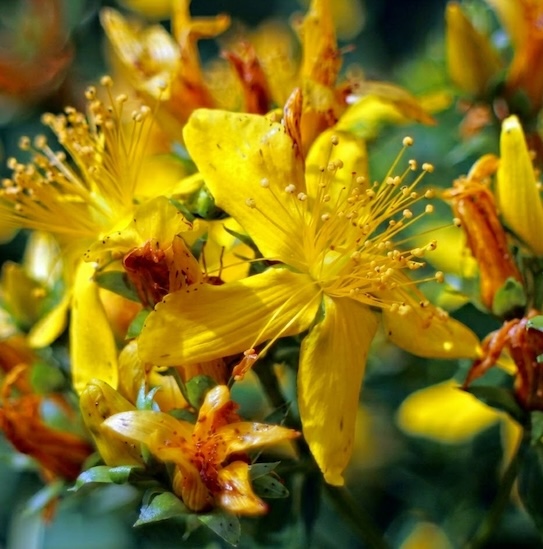
St John’s wort (Hypericum perforatum) belongs to the Hypericaceae family. It grows mainly in dry areas, along roadsides and paths. Also known as “St John’s herb” or “devil chaser,” it was considered by Druids to be a blessed plant, believed to ward off evil spirits due to its scent. It was long used as a topical treatment for burns, but today it is primarily recognized and valued for its “antidepressant” properties. St John’s wort is said to help maintain a positive mood and emotional balance*. Hypericin, the plant’s main active compound, is identified as being responsible for this effect.
Saffron (Crocus sativus), a small perennial plant belonging to the Iridaceae family, blooms in autumn. At this time, large violet, cup-shaped flowers with very long and highly aromatic stigmas appear. These stigmas are harvested and carefully dried before being commercialized. While saffron is commonly used in cooking for its flavor and coloring properties, it is also known for its health benefits: it helps promote relaxation and maintain a positive mood*.
Available extracts of St John’s wort standardized to 0.3% hypericin, and saffron standardized to 3% crocin / 2% safranal.
Europe Origin
*authorized claims pending evaluation by the European Commission.